

Tente de forage au col du Dôme, à 4.250m d’altitude au sommet du massif du Mont Blanc. En 2016, des carottes de glace y seront prélevées pour être acheminées et conservées en Antarctique. Crédit Bruno Jourdain, LGGE/OSUG/UJF

The Alps: Antarctica soon to be a bank of ice cores

The Alps: Antarctica soon to be a bank of ice cores

FOCUS – Are the glaciers threatened by climate change? In order that these archives, which are true studies by climate science laboratories, do not disappear, researchers have a project to store samples in Antarctica. The first ice core bank is being planned, kicking-off in 2016, with the first drilling in the Mont Blanc massif.


Tente de forage au col du Dôme, à 4.250m d’altitude au sommet du massif du Mont Blanc. En 2016, des carottes de glace y seront prélevées pour être acheminées et conservées en Antarctique. Crédit Bruno Jourdain, LGGE/OSUG/UJF

A drilling tent has been set-up at the Dôme mountain pass, at an altitude of 4,250m, on the summit of Mont Blanc. In 2016, ice cores will be collected from there and transported to Antarctica for storage. © Bruno Jourdain, LGGE/OSUG/UJF


Are the glaciers threatened with extinction? Not yet, but the project is for researchers to freeze threatened ice samples, therefore, creating a ‘bank’ of ice cores, (relatively) protected from global warming


The first sample should be collected at the beginning of 2016, from Mont-Blanc. The ice cores will then be transported to Antarctica, from the French-Italian Concordia base, which guarantees a temperature of -53°C.


“It’s the best freezer in the world”, says Jérôme Chappellaz, director of research at the laboratory of glaciology and environmental geophysics in Grenoble (LGGE). “The ice cores will be safe, even in the event of global conflict. There is no need for electricity; they will remain cold, even if the temperature rises by 10°C on the Antarctic plateau, by the end of the century. The ice cores will not be in danger at -43°C.”


Disappearing archive
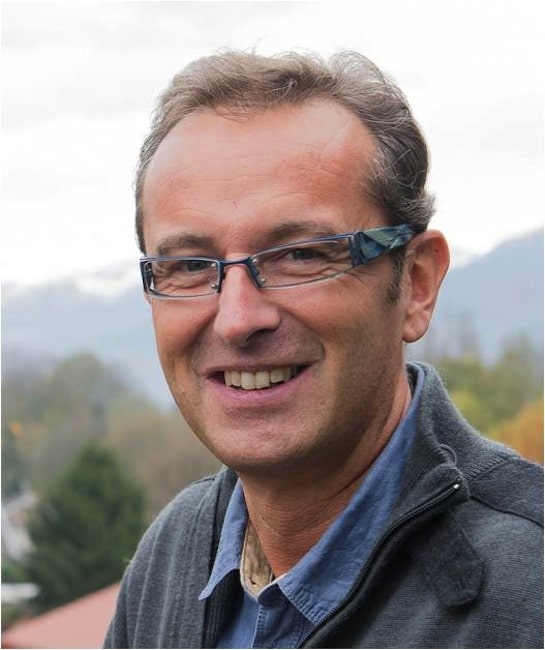


Jérôme Chapellaz, directeur de recherche CNRS au laboratoire de glaciologie de Grenoble. Credit CNRS Photothèque / Cyril FRESILLON

Jérôme Chappellaz, director of research at the laboratory of glaciology and environmental geophysics in Grenoble. © CNRS Photothèque – Cyril Fresillon

What is the objective? Build a wealth of information to pass on to future generations, at the time of climate change, between global warming and decreased rainfall, affecting the planet’s glaciers. In the space of ten years, the alpine glacier at the Dôme pass, at an altitude of 4,300 meters, on Mont Blanc, and the Bolivian glacier, Illimani, above La Paz, have warmed by 1.5 to 2°C. The glacier Taconnaz, overlooking the Chamonix valley, is coming dangerously close to melting point.


“We are the only community, working on the climates of the past, to see the archives disappear”, warns the French scientist. “It is time to do something, immediately, while the glaciers can still provide exploitable material.”


By drilling and dating the ice, researchers hope to understand the present better, or even anticipate the future. This is the case in Nepal, where glaciology laboratory scientists from Grenoble are working alongside local researchers, drilling a Himalayan glacier. The objective: to understand better the evolution of Indian monsoons and the regional pollution sources.


A UNESCO accredited project


In 2009, French scientists, in association with their colleagues from South America, launched an international appeal, with no great response. Today, led by Grenoble’s laboratory of glaciology, as well as the French Paul-Emile Victor Polar Institute, the Institute of research and development (IRD), the CNRS, and with the support of the Grenoble’s Joseph Fourier University Foundation, they want to do otherwise, by looking for sponsors, in order to mount the first operations. They are relying on UNESCO’s accreditation of this initiative to encourage investors.


This “initiative contributes to UNESCO’s mandate”, explained Anil Mishra, hydrology specialist in the international organisation, which, since the 1960s and 70s, has been calling for a global inventory of perennial ice and glaciers, all indicators of climate change.


“We must help science to understand the impact of climate change on glaciers and water resources, in order to enable countries to make the right decisions, be it in India, Central Asia or Europe.”


Patricia Cerinsek


Traduction from Speak English Center

Phone : +33 4 76 50 39 79

1 avenue du Vercors, 38600 Fontaine FRANCE



Gardez un œil sur l'actu ! 👋

Les récap‘ actu de la grande région grenobloise deux fois par semaine. 👉
Gratuit et sans engagement !

Vous pouvez vous désinscrire à tout instant d'un simple clic.

Patricia Cerinsek

Auteur

Laisser un commentaire

Votre adresse e-mail ne sera pas publiée. Les champs obligatoires sont indiqués avec *

Ce site utilise Akismet pour réduire les indésirables. Découvrez comment les données de vos commentaires sont traitées.

A lire aussi sur Place Gre'net

Vidéosurveillance et polices municipales: la Région adopte des "contrats régionaux de sécurité"
Après l’accord avec le PS, des militants de Cap21 et de l’AEI démissionnent pour créer un nouveau mouvement

  EN BREF - Certains militants voient une « erreur politique » dans le ralliement au PS de Cap21 et de l'Alliance écologiste indépendante (AEI) pour Lire plus

Hydroélectricité alpine : cap sur le numérique et l'écologie Barrage de Livet-Gavet en eau. © EDF
Rencontres Business Hydro : les acteurs de l’hydroélectricité alpine misent sur le numérique et l’écologie

  FOCUS - La 5e édition des Rencontres Business Hydro qui devait se tenir le 10 novembre prochain est remplacée par un événement en ligne, Lire plus

Une vache s’est invitée gratuitement – pic de pollution oblige – à bord d’une rame de tramway ce mardi 13 décembre en début de soirée à Grenoble. © Joël Kermabon - Place Gre'net
Une vache descendue de Chartreuse profite de la gratuité des transports !

Une vache s'est invitée à bord d'une rame de tramway ce mardi 13 décembre en début de soirée. Non, il ne s'agit pas d'une information Lire plus

Le parasite de la toxoplasmose peut être responsable de maladies graves. Mais le mécanisme qu'il a mis au point pourrait ouvrir la voie à de nouveaux médicaments.
Toxoplasma gondii, a parasite full of… therapeutic promises

FOCUS - The toxoplasmosis parasite. Pregnant women know it well, because of the risks it brings to the foetus. Researchers from Grenoble too, as they Lire plus

Koolicar company launched the "Two months without my car" challenge which aims at making motorists less addicted to four wheels.
« Two months without my car » A hundred people in Grenoble take up the challenge

FOCUS - Two months without a car to test alternative modes of transport, such is the challenge taken up by 100 people in Grenoble at Lire plus

Tom Boothe, co-fondateur de la Louve à Paris. DR
Food Coop director Tom Boothe : « You can do something to take control »

INTERVIEW - While his documentary Food Coop is released on November 2 in theaters, director Tom Boothe, also co-founder of La Louve collaborative supermarket in Paris, Lire plus

Flash Info

|

13/10

19h16

|

|

13/10

13h13

|

|

12/10

20h45

|

|

09/10

10h24

|

|

08/10

11h32

|

|

05/10

23h27

|

|

30/09

10h54

|

|

28/09

19h21

|

|

26/09

23h48

|

|

25/09

15h20

|

Les plus lus

A écouter| Chronique Place Gre’net – RCF : Une imposante manifestation à Grenoble aux messages multiples… mais très anti-police

Société| Les syndicats des transports en commun de Grenoble déposent un préavis de grève du 12 octobre… au 1er janvier 2027

Économie| « L’incendie nous a mis a genoux » : Le Chardon bleu ferme ses six boutiques, à Grenoble et dans le Grésivaudan

Agenda

Je partage !